Laminate Veneers

A wafer of porcelain 0.3-0.7 mm thick, bonded to the front of the tooth to change its shape, length or colour with minimal or no enamel removal. The design is tried in your own mouth before anything is prepared.

Medically reviewed by Dentist Tuğçe Arslan Founding Dentist

A laminate veneer is a wafer of porcelain, 0.3–0.7 mm thick, bonded to the front surface of a tooth. It changes colour, shape and spacing while removing almost no tooth tissue, and it is the most natural-looking of the ceramic options — which is why it is the treatment of choice for front teeth that are structurally sound.

What Is a Laminate Veneer?

Veneers cover only the visible front surface of a tooth, not the whole tooth. That single difference is what separates them from crowns: a crown replaces the outer layer of the entire tooth, a veneer resurfaces one face of it.

Because so little is removed, the preparation usually stays within the enamel. A tooth prepared for a veneer keeps its own structure and its own nerve.

Porcelain is also the closest material we have to enamel in the way it handles light. It is slightly translucent at the edge and picks up colour from the tooth beneath, which is what stops a well-made veneer from looking like a flat white tile.

Who Are Veneers Suitable For?

Veneers are used where the tooth is sound but its appearance is not:

  • permanent discolouration that whitening cannot lift (tetracycline staining, darkening after root canal treatment);
  • chipped, notched or worn incisal edges;
  • gaps between the teeth;
  • mild crowding and shape irregularities (small or short teeth);
  • old, discoloured fillings in the front teeth.

They are not the answer for everything. Where a tooth has lost a lot of structure, has been root treated, or carries a large old filling, a veneer has too little to bond to and a crown is the sounder choice. Where teeth are significantly crowded or rotated, moving them with clear aligners first means thinner veneers and less tooth removed afterwards.

Active gum disease, untreated decay and heavy clenching all need addressing before veneers, not after. Veneers bonded onto inflamed gums show a dark margin within a couple of years, and veneers on an unprotected grinding habit chip.

How Are Veneers Fitted?

Treatment runs over two main appointments with a laboratory stage between them.

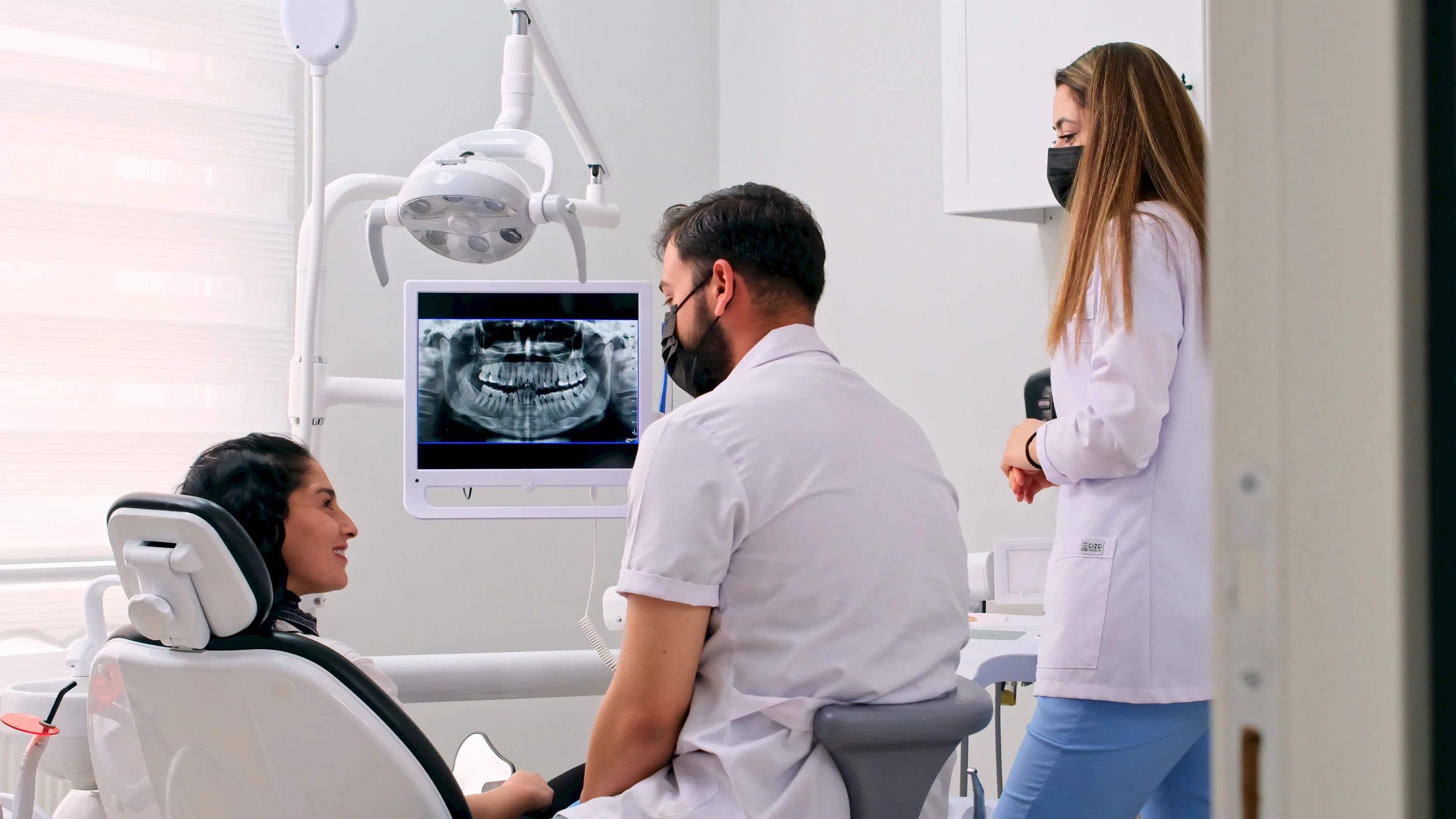
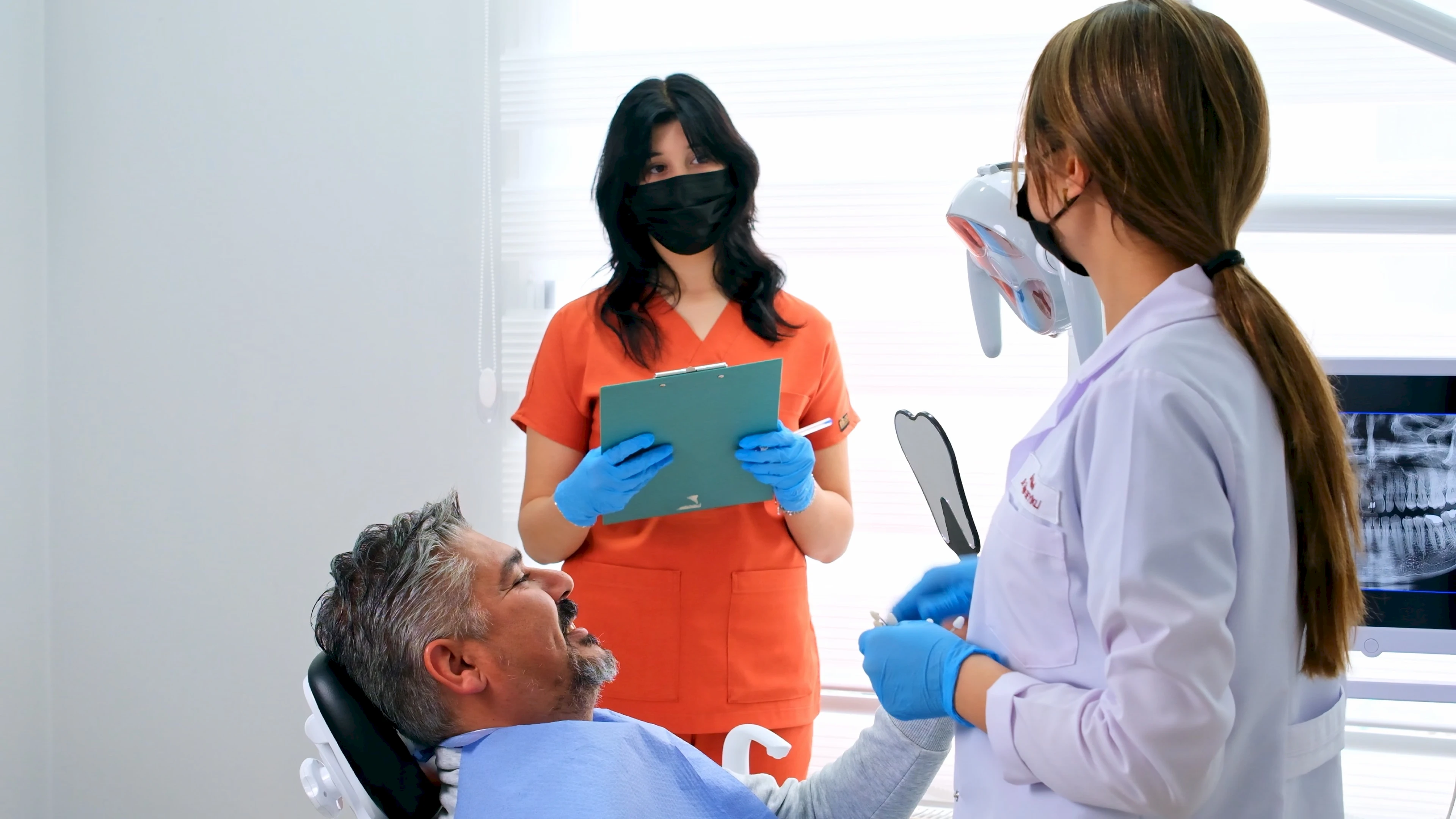
  1. Examination and planning: the teeth and the bite are assessed, and the target smile is planned with digital smile design.
  2. Mock-up: the planned shape is shown to you in temporary material over your own teeth; no preparation begins until you have approved the result.
  3. Minimal preparation: a thin layer is removed from the front surface (see the section below).
  4. Digital impression: the impression is taken with an intraoral scanner; no impression putty is needed.
  5. Temporary veneers: the teeth are protected with temporaries while the laboratory works.
  6. Try-in and bonding: shade, shape and bite are checked, and the veneers are bonded with a dedicated adhesive system.

The mock-up is the step worth insisting on. It is the difference between approving a result you have seen in your own face and accepting one that was decided for you on a screen.

Planning laminate veneers in Kuşadası
Impressions for veneers are taken digitally with an intraoral scanner.

How Much Tooth Is Removed?

"Will my teeth be filed down?" is the question we are asked most about veneers. Preparation is confined to the front surface and is usually limited to 0.3–0.7 mm — less than the thickness of a fingernail, and generally staying within the enamel. It is not comparable to the preparation needed for a crown, which reduces the tooth on all sides.

In some cases — small teeth, spacing, or teeth already slightly worn — no preparation at all is needed, and the veneer is bonded onto the untouched surface. Whether that applies to you is decided at the examination, and it is worth asking about rather than assuming.

Porcelain or Composite Veneers?

Both resurface the front of the tooth; the difference is the material and how it is made.

  Porcelain veneers Composite veneers (bonding)
Tooth preparation 0.3–0.7 mm (sometimes none) Usually none
Appointments 2 (laboratory stage) Most often a single visit
Lifespan 10–15 years or more 4–8 years
Stain resistance Does not stain Can discolour over time
Repair Replaced if fractured Repairable in the mouth
Cost Higher More economical

Composite is the better starting point for a younger patient, for a small correction, or for anyone who wants to see the change before committing to ceramic. Porcelain is the better long-term investment where several teeth are involved. For the composite option see bonding.

Veneers or Crowns?

A veneer covers one surface; a crown covers the whole tooth. The rule is to choose whichever removes less tooth tissue and still solves the problem — which usually means veneers where the tooth is sound and crowns where it is not. A tooth that has been root treated, has lost a large amount of structure or has a deep old filling does not have enough healthy surface for a veneer to bond to reliably. See zirconium crowns for that case.

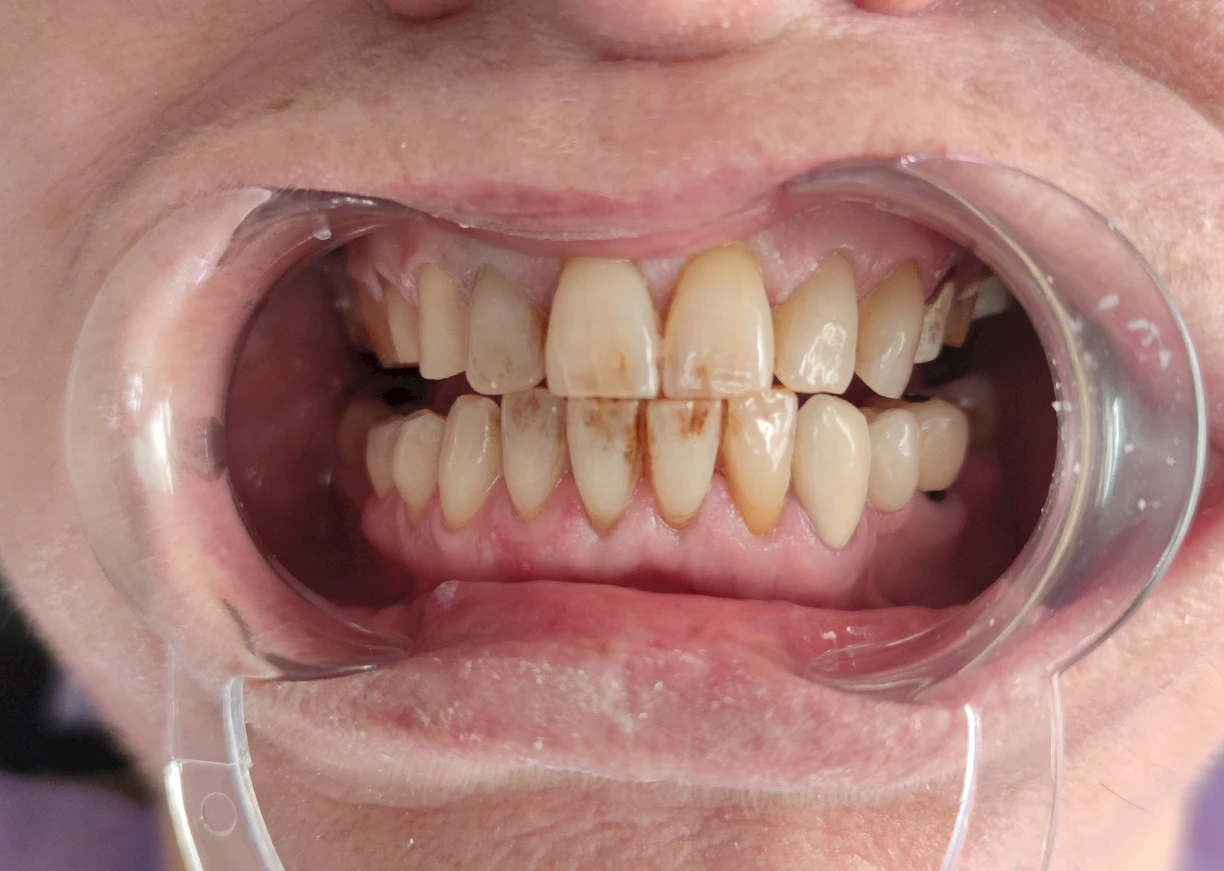
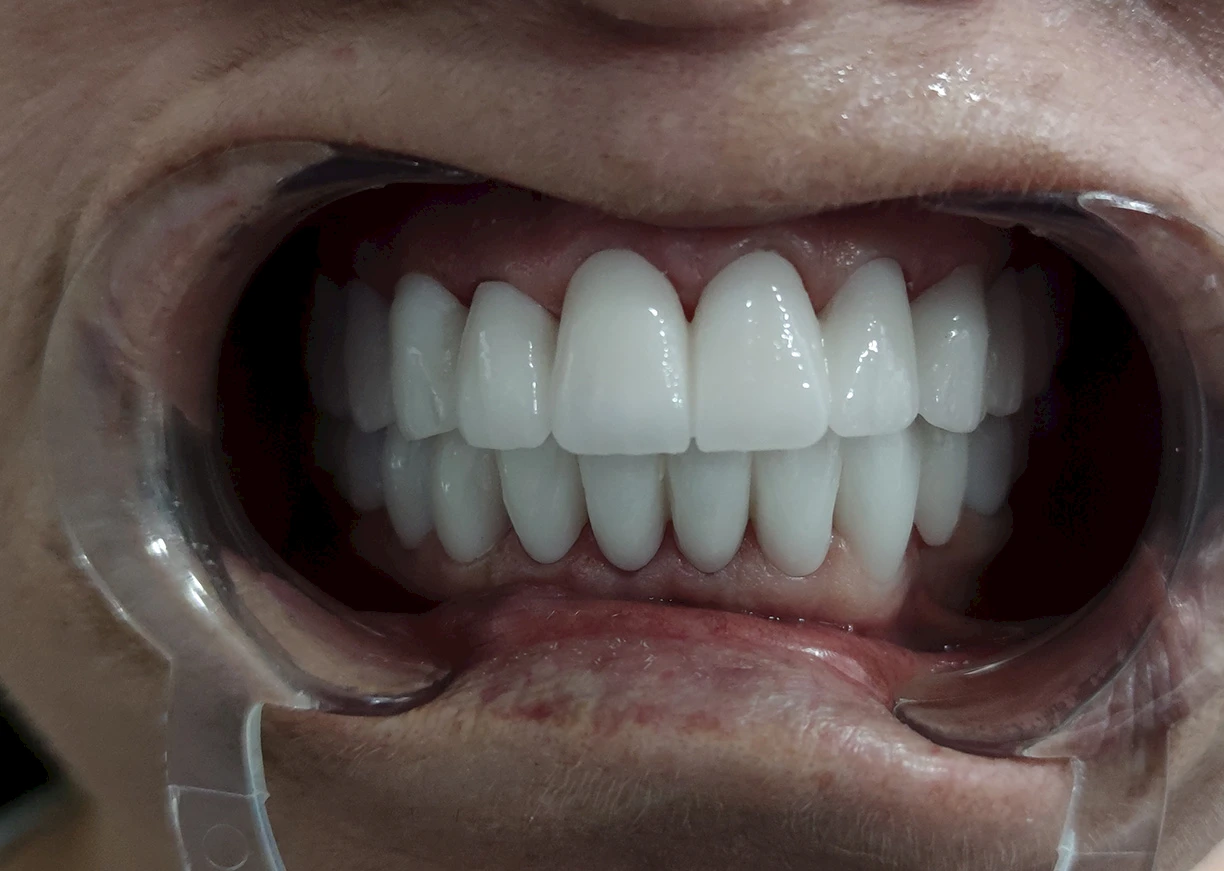
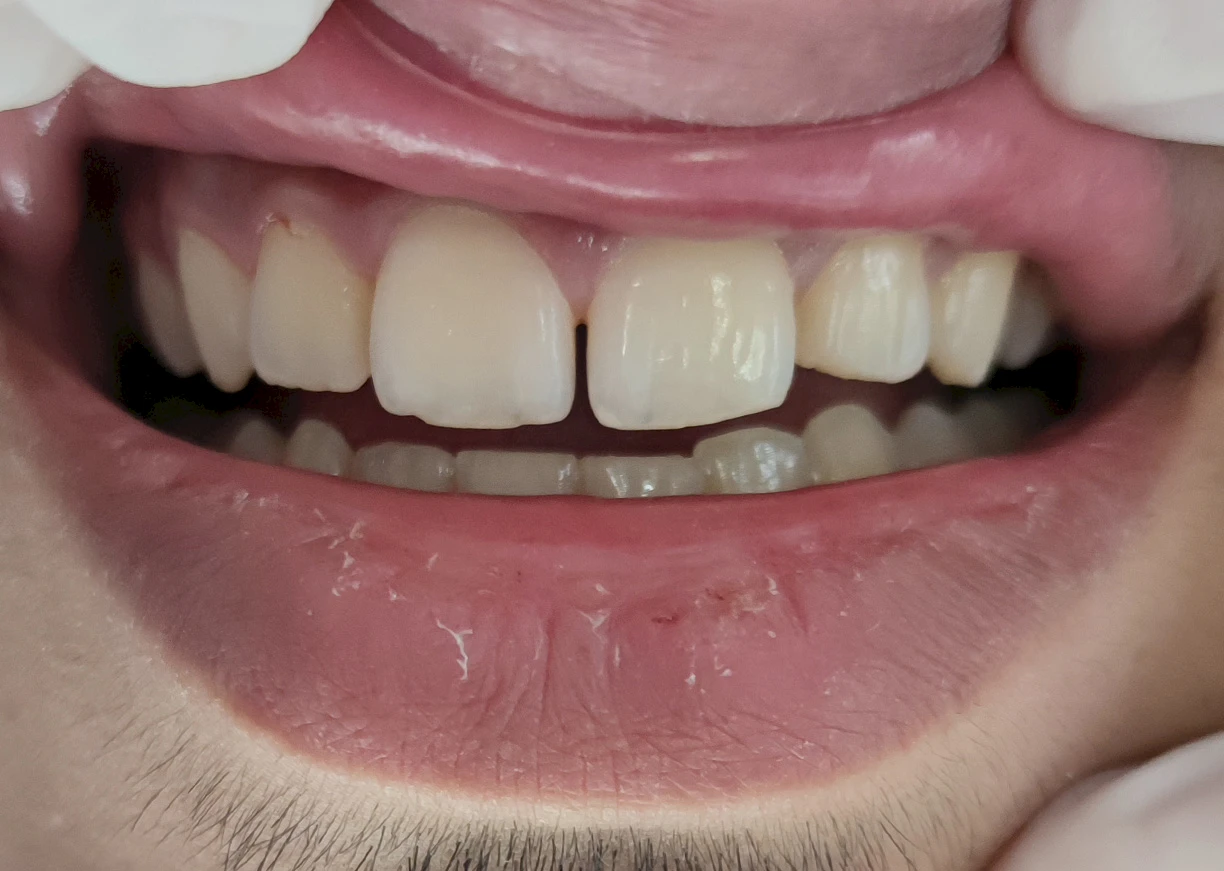
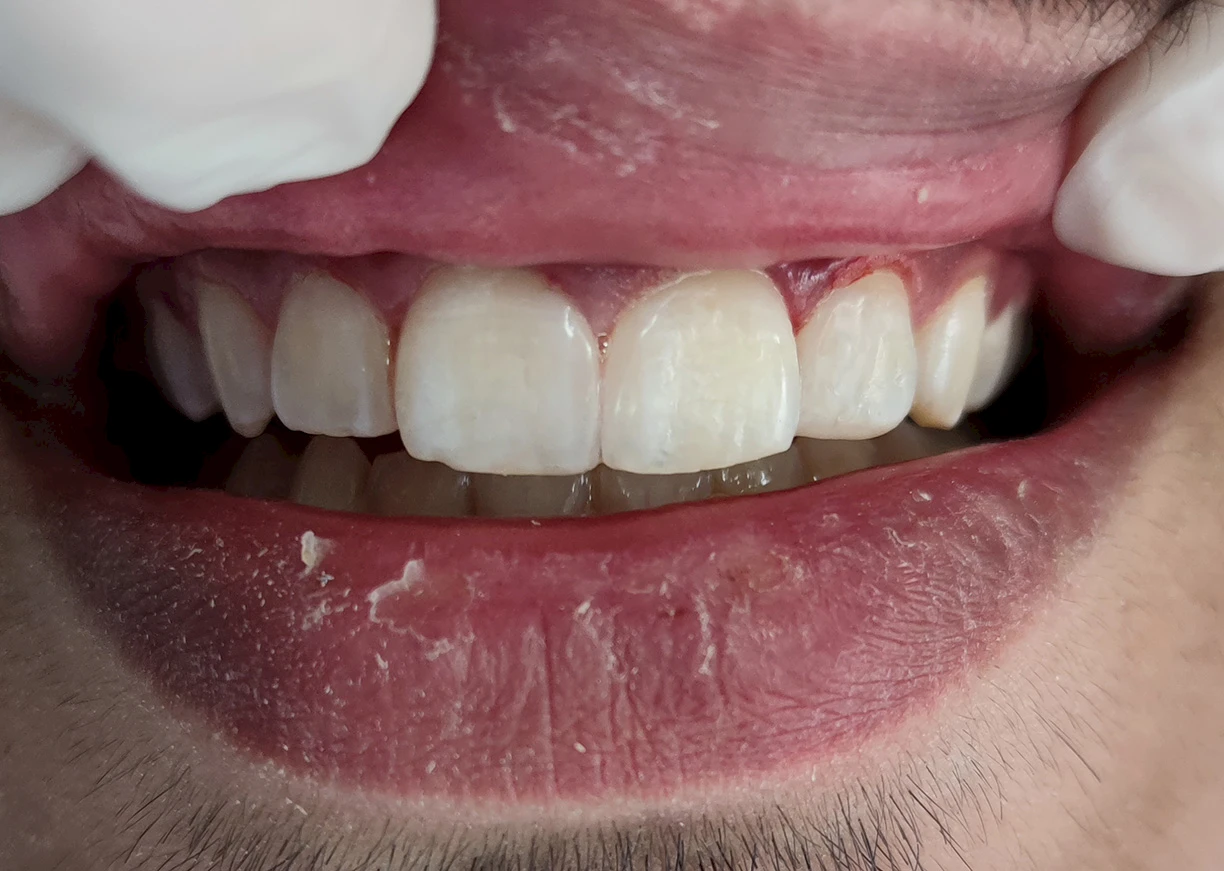
Laminate veneers before and after
Before and after veneers: colour and form renewed in a natural tooth appearance.

Coming to Turkey for Veneers

Veneers fit into a single stay. Because of the laboratory stage they cannot be finished in a day, but they do not need two trips either.

Allow around six to eight days: examination, digital design and mock-up at the start; preparation and digital impressions once the design is agreed; temporaries while the laboratory works; then try-in and bonding at the end. Where the shade needs a second try-in — most common with front teeth — the extra day is already inside that window.

If whitening is part of the plan, it comes first and the veneers are then matched to your final shade. Doing it in the other order leaves you with veneers that no longer match the teeth beside them.

Send photographs of your smile, close-ups of the front teeth and any recent X-ray on WhatsApp before you travel. We can then tell you whether veneers are realistic for your teeth, how many are likely to be involved and how long to allow — before you book flights.

How Long Do Veneers Last?

Porcelain veneers commonly last ten to fifteen years and often longer. What ends them is rarely the porcelain itself: it is decay in the tooth beneath, gum recession exposing the margin, or a fracture caused by force.

Bonding strength matters here. A veneer bonded to enamel holds far better than one bonded to exposed dentine — another reason minimal preparation is not just a marketing point.

If a veneer chips or debonds, keep the piece and contact us. A debonded veneer can often be re-bonded if it is intact and the tooth is sound.

Are Veneers Harmful?

Correctly indicated and correctly made, no. The risks come from doing more than the case requires:

Over-preparation. Removing more than the veneer needs takes the preparation out of the enamel and into dentine. That weakens the bond, increases sensitivity, and makes the tooth permanently dependent on a restoration. Veneers advertised as a quick way to a uniform smile are often, in practice, teeth prepared far more heavily than the word "veneer" suggests — sometimes prepared for crowns and called veneers.

Veneering teeth that only needed whitening or bonding. Irreversible treatment for a reversible problem is the most common regret in cosmetic dentistry, and it is avoidable at the consultation stage.

After Your Veneers Are Fitted

Mild sensitivity to cold for a few days is normal. Anything that still feels high in the bite after a few days needs adjusting rather than waiting out.

  • Do not bite hard objects with the front teeth — ice, pens, fingernails, nutshells.
  • Clean between the teeth daily; the margin is where problems start.
  • Wear a night guard if you clench or grind.
  • Keep to your professional cleaning appointments so the margins are checked.

Porcelain does not stain, but your natural teeth continue to change shade over the years. If only some teeth are veneered, that is worth keeping in mind at your check-ups.

How Much Do Veneers Cost?

There is no single price. What sets it is:

  • how many teeth are being veneered — the number visible when you smile varies from person to person;
  • porcelain or composite;
  • whether whitening, gum treatment or replacement of old fillings is needed first;
  • how many try-ins the shade match requires.

A package price for "a set of veneers" quoted before an examination has to assume the simplest case, and it says nothing about how many teeth actually show when you smile. We give the figure after the examination, with the plan.

Photographs sent on WhatsApp let us tell you in advance what is likely to be involved and roughly what to expect.

Laminate Veneers in Kuşadası

Beyaz Oral and Dental Health Clinic is a five-unit practice in the Cumhuriyet district of Kuşadası. The intraoral scanner used for digital impressions and the imaging used for planning are on site. The clinic holds the International Health Tourism Authorisation issued by the Turkish Ministry of Health.

The first examination and treatment plan are carried out personally by our founding dentist, Tuğçe Arslan. Where whitening or bonding would achieve what a patient is asking for, we say so — preparing sound front teeth for veneers that were not needed is not a service we are willing to sell.

To find out whether veneers suit your teeth, a short examination is the starting point. Use the form on this page, write to us on WhatsApp or call directly.

The information on this page is general in nature and does not replace an examination. A treatment plan suited to you is determined after clinical and radiographic assessment.

Before & After

Laminate Veneers Before and After

The images below are examples of veneer work carried out at our clinic. They show the effect of adjusting tooth length, shape and spacing on the smile line. Every patient has a different tooth structure and different expectations, so results vary from person to person.

Laminate Veneers Laminate Veneers

Case Examples

From a single chipped tooth to a full smile line, these images show a range of situations. They are shared for information only; whether veneers are right for you becomes clear after an examination, and a mock-up is made before anything is prepared.

Laminate Veneers Laminate Veneers
Frequently Asked Questions

Laminate Veneers

Does getting laminate veneers hurt

The preparation is done under local anaesthetic, so the appointment itself is painless. Because only a fraction of a millimetre of enamel is removed - and in some cases none at all - there is far less to numb than for a crown. Mild sensitivity to cold for a few days between the preparation and the fitting is normal and settles once the veneers are bonded.

Can laminate veneers fall off

It is uncommon. A veneer is bonded to enamel with an adhesive system that creates a chemical bond, not simply glued on. Debonding usually has a cause: bruxism, biting nails or opening packaging with the front teeth, or bonding to dentine rather than enamel because too much tooth was removed. If a veneer does come off intact, keep it, do not try to refit it yourself, and it can usually be re-bonded.

Can I see the result before the veneers are made

Yes, and we would not start without it. After the intraoral scan a digital design is made and shown to you, and from that design a mock-up can be placed directly onto your teeth in temporary material, so you see the shape and length in your own mouth and speak and smile with it before any preparation begins. Changes are made at that stage, when they cost nothing but time.

How many teeth need veneers

It depends on how far your smile line extends when you smile fully. Some patients need only the two central incisors matched; most smile-line cases involve six to ten upper teeth, and where the lower teeth show as well the plan may extend to both arches. The number is decided from the photographs and the digital design, not from a package - treating fewer teeth than the smile shows is what produces a visible colour step at the corner of the mouth.

Can veneered teeth be whitened

No - porcelain does not respond to whitening agents, and its shade stays as it was made. That is why whitening, if you want it, is done before the veneers, and the veneer shade is then matched to the newly lightened natural teeth. If existing veneers no longer match teeth that have darkened over the years, whitening the natural teeth back to the veneer shade is often enough; replacing the veneers is the last resort.

What happens if a veneer chips or breaks

A small chip at the edge can often be polished or repaired with composite in a single visit. A veneer that has fractured through is replaced: a new impression or scan is taken of that tooth alone and a single veneer is made to match the neighbouring ones. The more useful question is why it broke - most fractures trace back to unmanaged grinding, and a night guard is what stops the next one.

Can decay form underneath a veneer

Not under the porcelain itself, which cannot decay - but the margin where veneer meets tooth can, if plaque is left there. That is why marginal fit matters more than any other technical detail, and why flossing around veneers is not optional. With clean margins and six-monthly checks, decay under a veneer is rare; the cases we see almost always involve a margin that was overhanging from the start or years without a check-up.

Can veneers be placed on lower teeth

Yes, though the approach differs. Lower front teeth are smaller and thinner, and they take the brunt of the bite, so the porcelain has less room and more load. Where the lower teeth show when you smile or speak, veneering them is what keeps the result from looking top-heavy. Where crowding is the main problem, aligning the lower front teeth first is usually a better answer than covering them.

If my gums recede, will the edge of the veneer show

It can, over years, which is why the gum condition is assessed before anything is prepared. Veneers are not placed on inflamed or actively receding gums; the gum is treated first and the margin is then designed to sit at the gum line rather than under it. If recession does expose a margin later, the affected veneer can be replaced individually - and the recession itself is treated, since covering it changes nothing.

How is the shade of the veneers chosen

Not from a catalogue photograph. The shade is selected with you at the clinic in daylight, against your skin tone, the whites of your eyes and the teeth that will not be veneered, and it is recorded with photographs for the laboratory. The mock-up stage lets you live with the shape before the colour is finalised. Patients who ask for the brightest shade in the guide are shown what it looks like on their own face first - most then choose a step or two warmer.

Can a root-canal-treated tooth have a veneer

Sometimes, but it is not the default. A root-treated tooth is more brittle and often darker from within, and a thin veneer neither reinforces it nor reliably masks the discolouration. Where much of the tooth is gone, a crown or an onlay protects it better. Where the tooth is largely intact and only discoloured, internal bleaching followed by a veneer can work well. The X-ray decides, not the wish.

Veneers or teeth whitening - which do I need

If your teeth are well aligned, undamaged and simply darker than you would like, whitening is the answer: it is reversible, costs less and removes no tooth structure. Veneers are for what whitening cannot change - shape, length, gaps, chips, worn edges and discolouration that comes from inside the tooth, such as tetracycline staining. Anyone who recommends veneers before whitening has been discussed is selling, not diagnosing.

Other Treatments

Appointment

We Will Call You

Leave your name and phone number and we will get back to you shortly.

By submitting this form you accept the processing of your personal data under our Privacy Notice .

YA DA
Call Now+90 501 054 92 99
Get A Free Quote